September 01 2026 at 09:34AM
PMI NL, how it all started
PMI Netherlands was initiated in early 2000, when PMI in the country was challenged by PRINCE2 and was presented only as part of the BeNeLux Chapter. Although PMI BeNeLux held annual events close to the Dutch border, the travel distance for Dutch PMs and the Chapter's growth led Louis Mercken, then president, to look for candidates who would later found a separate Dutch Chapter.
With that in mind, in January 2000 two Dutch PMI members, René Vielvoije and Ruud Homburg, joined the Board of Directors of BeNeLux Chapter. In May 2000, PMI BeNeLux combined this with a similar existing initiative driven by Bill Nelson. Finally, 8 people initiated PMI Netherlands, linking it with PMI BeNeLux through René Vielvoije.
After forming a Chapter Steering Committee in July 2000, reassigning its roles in December 2000, and forming a group of four in January 2001, three people became “Founding fathers” of the PMI Netherlands: Jan Vermeijs, René Vielvoije and Anton Zandhuis. After so many events in a short time, we planted the seed for the PMI Dutch Chapter.
Thanks to outstanding cooperation between the two chapters, proper training (thanks, Louis Mercken!), clear roles, and high proactivity, we met the initially planned deadline of 1 Jan 2002 half a year early, on 23 Aug 2001. We knew how to be agile back then!
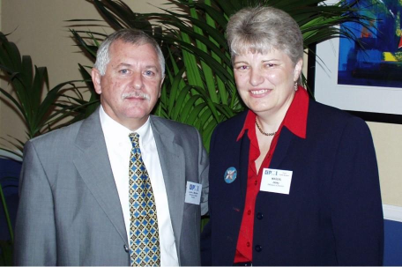
Louis Mercken, Chair PMI BeNeLux Chapter and Jessy Magerl, PMI Board of Directors
Keeping our website was a challenge. Transferring “big” files (less than the size of a picture) with website content required floppy disks, which we frequently exchanged. Daily maintenance of chapter website was an ordeal as well. Nevertheless, volunteers did and keep doing their best to keep the website functioning.
We had to be very creative to design a new logo for PMI Netherlands. As a result, we added tulips as a symbol of our Dutch roots and our support for the continuous professional growth of Chapter members. The symbol was present on wine bottles used as gifts within the Chapter:
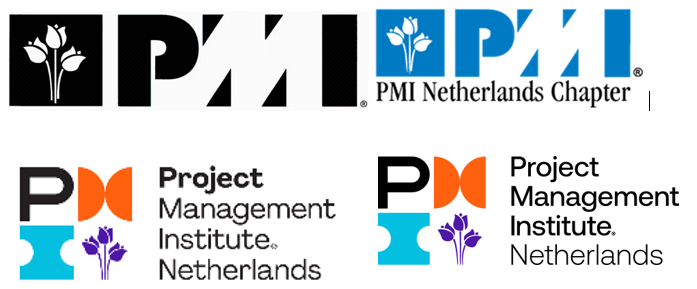
Logos over time
The Chapter grew up quickly: from 159 in Aug 2001 to 328 in June 2002, mostly due to internationally driven organizations: networking mattered. However, the Chapter initiation revealed an issue: there was a parallel PM association, “Project Management Instituut,” linked to global IPMA. As a result, PMI ordered us to change our name, and after rounds of negotiations, IPMA-NL and the PMI Netherlands Chapter found a common language that continues today. Dutch legendary “samenwerking" was top-notch!
Luckily, the Chapter had a luxury financial position due to a supportive agreement with PMI Benelux, which provided for the transfer of Dutch members' contributions for 2001 to PMI Netherlands. Sponsors also invested heavily; as a result, we built a cushion against risks associated with several initiatives and projects.
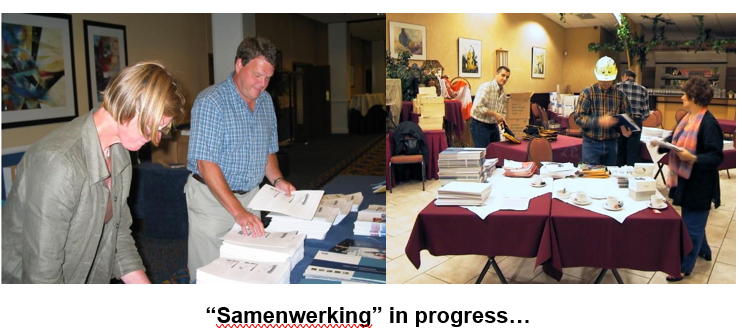
Since then, a project manager from the Dutch and Benelux Chapter has arranged the annual PMI Benelux Day in turn, and it has taken place in the Netherlands or Belgium. Board members were deeply engaged in preparation in the evenings beforehand - with a lot of fun! Even our partners helped gather the seminar handouts and organize partner programs.
We also launched the Dutch translation of PMBOK version 3, with many linguistic nuances and discussions (e.g., Scope = Inhoud en reikwijdte). Later, we learned the logistical consequences of this project when a board member had to store 400 copies of PMBOK in his garage, answer mail orders, ensure payments, and arrange wrapping and shipping. Being a board member meant getting “extensive” feedback on your ideas!
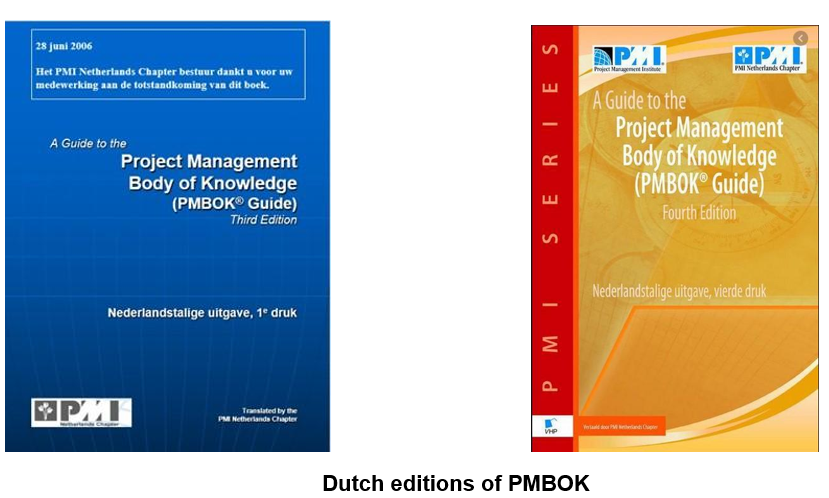
Remarkably, cooperation between the Dutch Chapter and Van Haren Publishing, then a relatively small publisher, still exists. They took over storage and logistics and sponsored and actively contributed to the translation and publication of PMBOK 4.
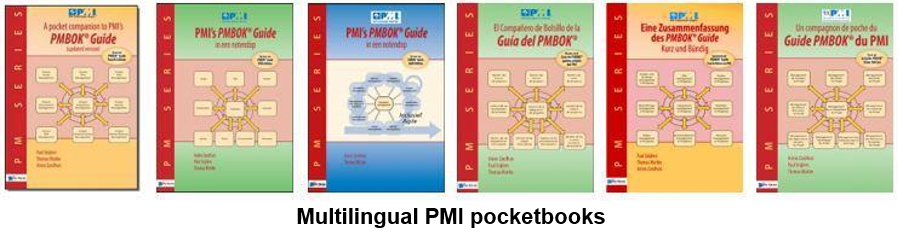
After learning this lesson, we created a shorter Dutch version of PMBOK: “A Pocket companion to PMI’s PMBOK Guide”, initiated by two Chapter volunteers, Paul Snijders and Anton Zandhuis. Through our PMI network, we came across Thomas Wuttke, a PMBOK expert and Munich Chapter member, who had already published German translations.
To reduce the complexity of our translation project, we took a two-step approach: we created an English reference to ensure the manuscript fully aligned with PMBOK 4, and we added the Dutch variant “PMI’s PMBOK Guide in een notendop”, using the English manuscript as a reference. Anton Zandhuis, Rommert Stellingwerf, and Andre Legerman did this. Thomas Wuttke took care of the German translation “Eine Zusammenfassung des PMBOK Guide – Kurz und Bündig". The project became such a success that PMBOK 5 was translated into Spanish and French, together with Dutch and German.
Many other initiatives followed, like the ISO21500 standards. On this occasion, PMI Netherlands sponsored a representative on behalf of the Dutch ISO (NEN) delegation, Rommert Stellingwerf, for drafting these global PM standards; an initiative that is continuing today.
The pictures below show the 15th anniversary celebration for our ‘baby Chapter’.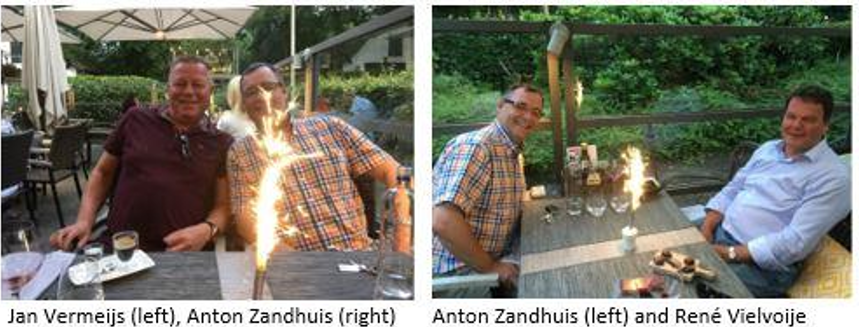
We are currently celebrating our 25th anniversary, and our membership has grown to over 1900! We are still a vibrant community with many initiatives, including internationally recognized programs like the Mentorship program, a Buddy program, and the recent launch of a new team focused on Social Impact and Sustainability.
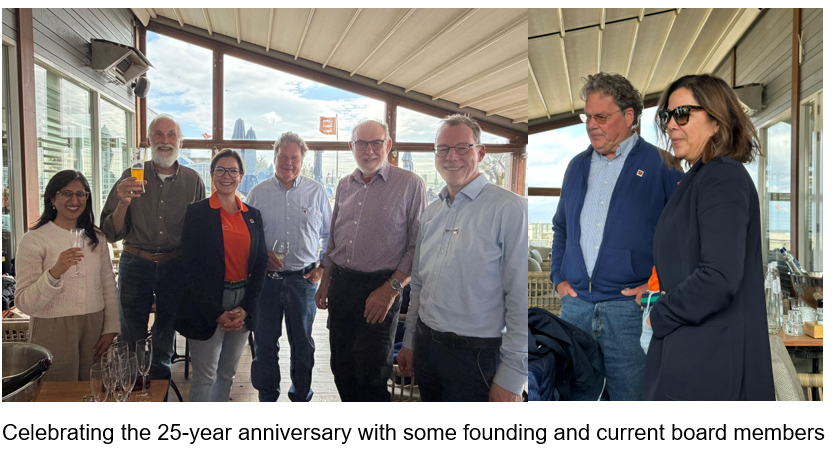
So … that’s the story. How it started as an idea some 25 years ago, which acted as the seeds from which, like tulips, the PMI Netherlands Chapter started growing. Since then, it has seen many periods of flowering.
As “Founding Fathers”, this whole ‘Chapter adventure’ brought us many personal opportunities to learn, share, and contribute to the growth of the PM profession in the Netherlands. We really enjoyed the trip, and we’re still in touch as friends.